A dripping faucet is often treated as a minor household nuisance, but in high-density residential properties across Washington Square West, Midtown Village, and Bella Vista, a malfunctioning fixture represents continuous water waste and potential property damage. Whether dealing with a kitchen sink faucet that drips persistently after being turned off, a bathroom vanity handle that feels loose and unstable, or a shower control valve that is difficult to turn, property owners face a practical choice: should you repair the internal mechanisms or replace the fixture entirely? Understanding the mechanical anatomy of modern plumbing fixtures helps determine the most cost-effective path to a watertight home.
Analyzing Common Faucet Malfunctions
Residential faucets operate using internal valves that control water flow and temperature mixing. When these components experience mechanical wear or hard-water mineral scaling, distinct performance failures emerge:
- Persistent Spout Dripping: A continuous drip from the faucet spout when the handle is in the off position indicates that the internal valve seat, O-ring, or ceramic cartridge is no longer forming a watertight seal against incoming municipal water pressure.
- Water Pooling Around the Base: Discovering water pooling on the sink countertop around the base of the faucet body indicates that internal body O-rings have degraded, or that the mounting gasket sealing the fixture to the sink deck has failed.
- Stiff or Binding Handles: When a faucet handle becomes difficult to turn, squeaks during operation, or requires excessive force to shut off, hard-water calcium deposits have built up inside the cartridge assembly, stripping the internal lubricants.
- Low Water Flow at One Tap: Experiencing weak water flow at a single bathroom or kitchen faucet while other household taps flow normally indicates a localized restriction. This is typically caused by sediment dislodged from city water lines clogging the removable aerator screen on the spout tip, or mineral debris obstructing the internal valve cartridge.
- Loose or Unstable Mounting: A faucet body that rocks or shifts on the countertop when operated indicates that the under-sink mounting nuts have loosened, or that the supporting sink deck has suffered water damage.
Differentiating Fixture Defects from Under-Sink Leakage
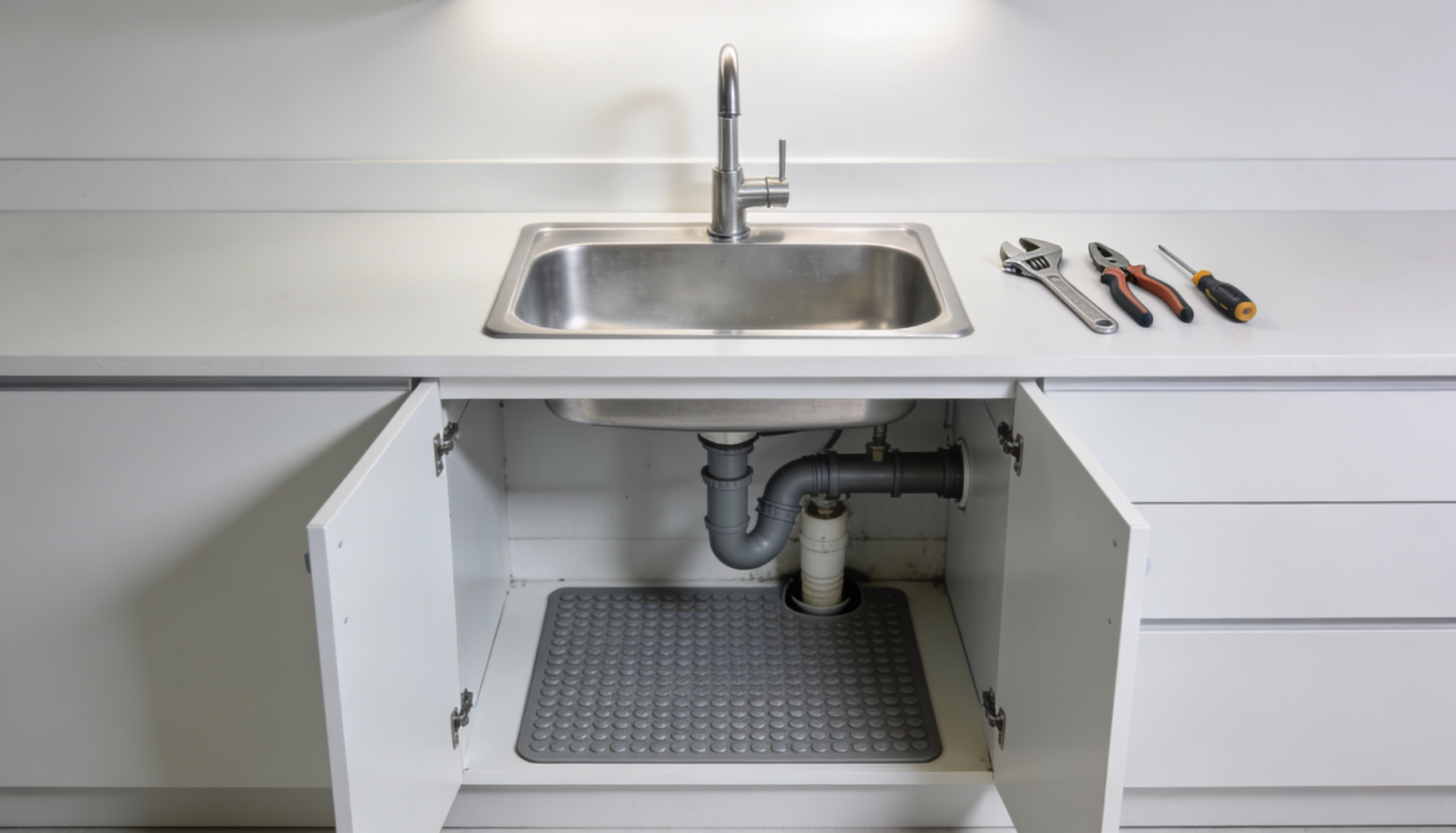
When troubleshooting a wet vanity cabinet, it is critical to distinguish between a defect within the faucet body and a plumbing failure beneath the sink deck. Water inside a cabinet can originate from leaking threaded supply hose connections, corroded copper angle-stop shutoff valves, or loose PVC P-trap slip nuts on the drainage side. A thorough visual inspection under bright lighting confirms whether water is dripping down through the sink deck mounting hole from the faucet above, or leaking directly from pressurized supply connections below.
When Internal Component Repair Is Practical
Not every dripping faucet requires complete replacement. In high-end solid brass or designer fixtures where the exterior finish remains immaculate, repairing internal components is highly cost-effective. Modern single-handle and double-handle faucets rely on standardized ceramic or compression cartridges. A qualified plumber can isolate the water supply, disassemble the handle trim, extract the mineral-crusted cartridge, and install a genuine OEM replacement cartridge and fresh O-rings. This precision repair restores smooth, leak-free operation without the expense of purchasing a new fixture or altering existing plumbing configurations.
Circumstances That Justify Full Fixture Replacement
Complete faucet replacement becomes the superior financial and aesthetic decision under specific structural or performance conditions:
- Widespread Exterior Corrosion: When a faucet displays peeling chrome, pitted brushed nickel, or heavy green oxidation around the spout and joints, the underlying brass or zinc casting has degraded. Corroded metal cannot be permanently resealed.
- Obsolete or Discontinued Hardware: For older fixtures where replacement cartridges are no longer manufactured, attempting to adapt generic parts often results in persistent leaking.
- Upgrading Water Efficiency: Older residential faucets can flow at rates of 2.2 to 2.5 gallons per minute (gpm). Upgrading to a modern fixture meeting EPA WaterSense bathroom faucet specifications reduces water flow to 1.5 gpm or less without sacrificing pressure, conserving clean water and lowering quarterly utility bills.
Essential Pre-Installation Planning Considerations
If fixture replacement is chosen, careful pre-installation planning ensures compatibility with your existing architectural setup. Before purchasing a new faucet, evaluate:
- Sink Hole Configuration: Confirm whether your sink deck or countertop is drilled for a single-hole, four-inch centerset, or eight-inch widespread fixture.
- Spout Reach and Height: Ensure the new spout extends directly over the center of the sink drain basin to prevent splashing, while verifying that tall arc spouts clear existing overhead window frames or medicine cabinet doors.
- Under-Sink Access and Shutoffs: In Center City condominiums and managed apartments, verify that under-sink shutoff valves are fully functional so water can be isolated locally without requiring building-wide water shutoffs or management coordination.
Whether restoring a high-end shower valve or installing a new kitchen fixture, relying on professional faucet repair in Center City ensures precision craftsmanship. A qualified plumber guarantees tight mounting, leak-free supply connections, and proper cartridge calibration. For comprehensive neighborhood support, connect with our Center City plumbing services team today.
Why does my faucet continue to drip from the spout after I turn the handle off? Spout dripping occurs when the internal rubber O-rings, rubber washers, or ceramic valve cartridge degrade or become scored by mineral sediment, preventing the valve from forming a complete seal against incoming water pressure.
Can I replace just the internal cartridge without buying a brand-new faucet? Yes. If the exterior metal finish of the faucet is in good condition and free of corrosion, replacing the internal cartridge assembly and O-rings is a standard, cost-effective repair that restores leak-free operation.
Why is water pooling on the countertop around the base of my faucet? Water pooling around the exterior base typically indicates that the internal O-rings sealing the rotating spout to the faucet body have worn out, or that the rubber base gasket sealing the fixture to the sink countertop has failed.
What causes low water pressure at only one sink in my apartment? Low pressure isolated to a single faucet is almost always caused by mineral scale, rust flakes, or municipal sediment clogging the small aerator screen screwed onto the tip of the faucet spout, or debris obstructing the internal valve cartridge.
What measurements do I need before buying a replacement bathroom faucet? Before purchasing a new faucet, measure the distance between the centers of the outer mounting holes on your sink deck (typically four inches for centerset or eight inches for widespread) to ensure the new fixture’s mounting posts align correctly.