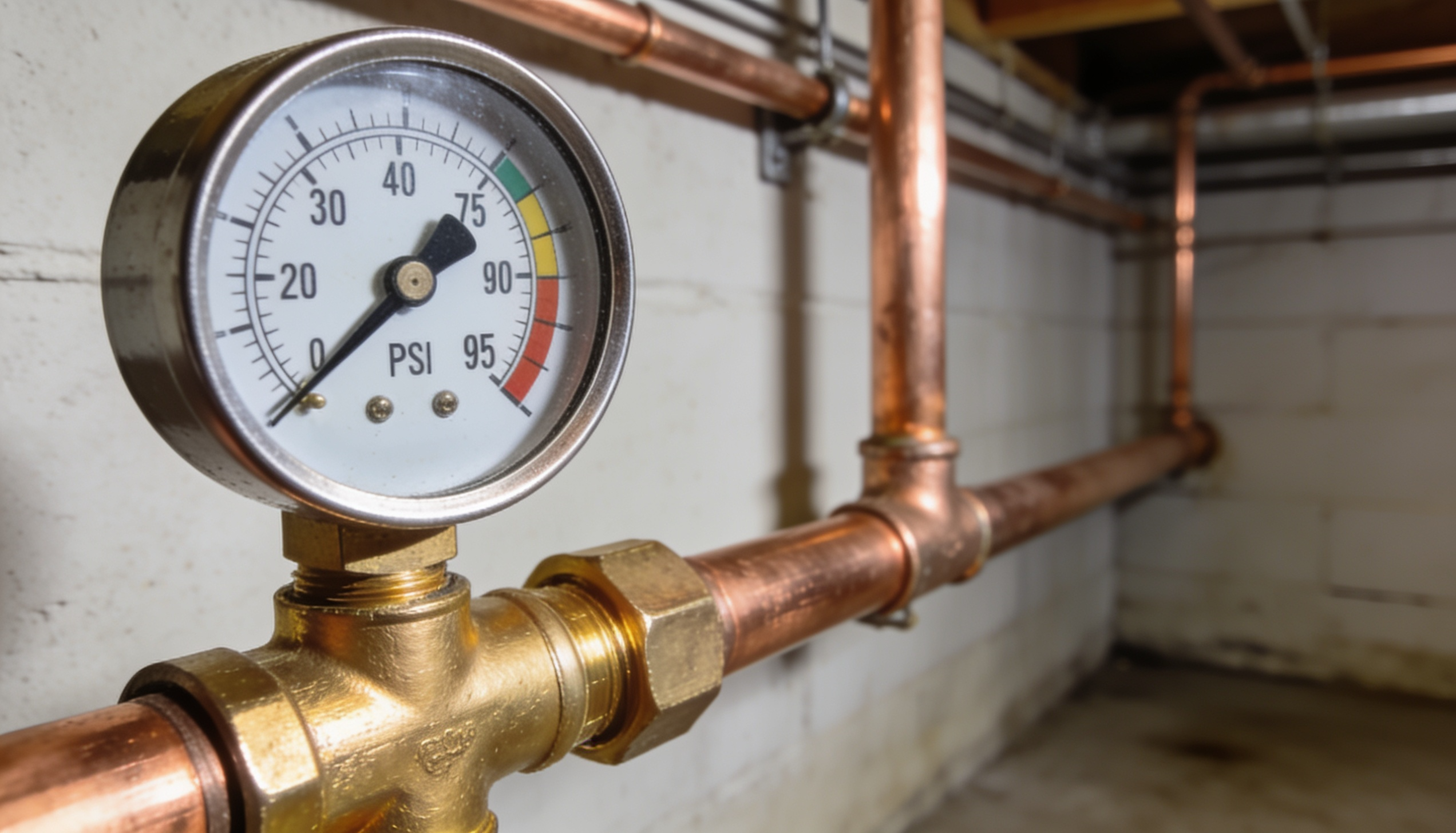
While low water pressure is a common complaint, excessively high water pressure is a far more destructive plumbing problem. To deliver water up to upper floors and across dense urban zones, municipal water lines in Center City often run at high pressures, sometimes exceeding 90 PSI ($90\text{ psi}$). While this is necessary for city infrastructure, letting that high pressure flow directly into your home’s private plumbing system can cause severe damage.
Excessive water pressure strains pipe joints, wears out appliance valves, and causes noisy water hammer. Investing in a professional plumbing repair Center City service to test your pressure and install a regulatory valve protects your home’s infrastructure from expensive leaks.
Defining Safe Residential Water Pressure Parameters
For standard residential plumbing systems, the ideal water pressure sits between 45 and 60 PSI ($45\text{-}60\text{ psi}$). According to the International Residential Code (IRC), any water pressure coming into a home that exceeds 80 PSI ($80\text{ psi}$) requires the installation of a Pressure Reducing Valve (PRV) to protect the plumbing system.
0 psi ——– 45 psi ================= 60 psi ——– 80 psi ——– 100 psi
Low Pressure [ Ideal Residential Range ] High Pressure [ Danger Zone: Damage ]
When pressure spikes past 80 PSI ($80\text{ psi}$), internal rubber gaskets, toilet fill valves, and flexible appliance hoses are forced to operate beyond their design limits. This excessive wear can lead to sudden pipe bursts and slow leaks behind walls that can go unnoticed until they cause significant drywall and structural damage.
The Warning Signs of Excessive System Pressure
Homeowners can watch out for several clear warning signs that indicate their household water pressure is running too high:
- Persistent Water Hammer: A loud banging or thumping sound inside your walls when a faucet or washing machine valve snaps shut.
- Constantly Running Toilets: High pressure forces water past the toilet’s fill valve seal, causing water to run into the overflow tube continuously.
- Frequent Faucet Drips: High pressure wears down internal rubber washers and ceramic cartridges, causing faucets to drip even when turned off tightly.
- Shortened Water Heater Lifespan: Rapid temperature changes combined with high pressure strain your tank’s welded seams, leading to premature water heater repair Center City needs.
How a Pressure Reducing Valve Protects Your Home
A Pressure Reducing Valve (PRV) is a heavy-duty brass valve installed on your main water supply line, directly after your indoor water meter. The valve features an internal spring-loaded diaphragm that automatically slows down high incoming water pressure from the city street, dropping it down to a safe, steady level before it enters your home’s plumbing lines.
High Street Pressure (95 PSI) —> [ PRV Spring Diaphragm Valve ] —> Safe Home Pressure (55 PSI)
Installing a PRV lowers the stress on your entire plumbing system, extending the life of your dishwasher, washing machine, and water heater. It also helps conserve water by reducing the volume of water forced through your fixtures during daily use, which can help lower your monthly water bills.
Testing and Replacing Worn Regulatory Valves
Like any mechanical plumbing component with moving parts, Pressure Reducing Valves can wear out over time. The internal rubber diaphragms can stiffen or tear after ten to twelve years of continuous service, causing the valve to fail.
When a PRV fails, it can either cut water pressure down to a trickle or allow high street pressure to flood into your home’s lines. A licensed plumber Center City Philadelphia professional can test your system’s pressure using a specialized gauge and replace a worn PRV quickly, ensuring your home’s water lines stay balanced and protected from unexpected pressure spikes.
CTA
Are loud thumping pipes or dripping faucets causing problems in your home? Protect your plumbing lines and appliances from high water pressure damage. Contact Center City Plumbing Experts today to schedule a professional water pressure test and valve adjustment.